
Some songs seem to exist outside the limits of time. No matter how many years pass, their melodies still stir the heart as if they were written yesterday. One such song is "Can't Help Falling in Love," the tender ballad made famous by Elvis Presley. For generations, its gentle melody has carried a message of devotion that feels as fresh today as it did when it first echoed across radios in the early 1960s.
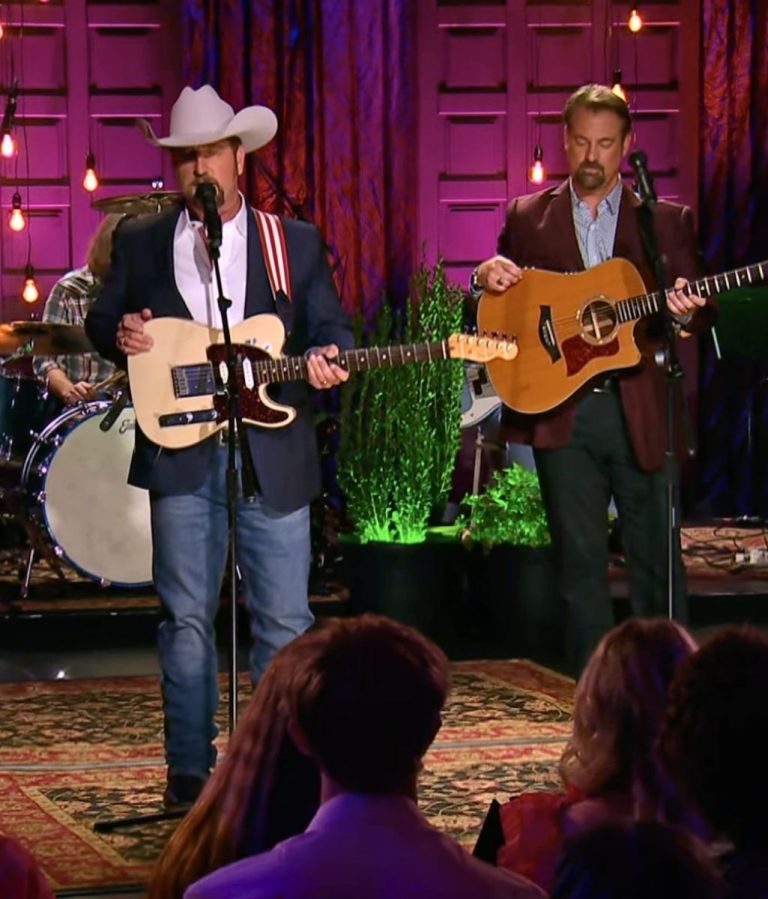
When Wilson Fairchild steps onto the stage to perform this beloved classic, the atmosphere changes almost instantly. The duo—made up of Wil Reid and Langdon Reid—does not simply sing the song. They treat it as something precious, a musical heirloom passed through generations of artists who understand the emotional weight carried within its lyrics.
Their connection to musical heritage runs deep. Both men are sons of members of the legendary The Statler Brothers, a quartet whose harmonies helped define classic country music for decades. Growing up surrounded by that tradition shaped the way Wil and Langdon approach every performance. For them, music has never been just about technique or applause—it has always been about sincerity.
That sincerity becomes unmistakable when the opening chords of "Can't Help Falling in Love" begin.
The stage lights soften, and the audience grows still. The melody, instantly recognizable, unfolds slowly and gently. Instead of overpowering the song with dramatic flourishes, Wilson Fairchild leans into its quiet beauty. Their harmonies glide together with warmth and restraint, honoring the emotional simplicity that made the song legendary in the first place.
Wil's voice carries a grounded richness that reflects the musical influence of his father, Harold Reid. Langdon's tone adds clarity and balance, echoing the smooth vocal tradition shaped by his father, Don Reid. Together, they create a harmony that feels both nostalgic and fresh—like hearing a familiar story told by a new generation.
The audience often responds with a kind of quiet reverence. Many listeners grew up hearing Elvis Presley's original recording, perhaps during meaningful moments in their lives—weddings, anniversaries, or long evenings spent listening to classic records. Hearing the song performed live again, especially with such heartfelt care, brings those memories rushing back.
Yet Wilson Fairchild's rendition does something special. It bridges two great musical legacies at once.
On one hand, it honors Elvis Presley, whose voice helped make the song one of the most beloved ballads in modern music. On the other, it reflects the harmony-centered tradition of the Statler Brothers, whose influence still shapes the sound and spirit of Wilson Fairchild's performances.
That blend of influences gives the song new depth.
As the performance reaches its final lines, the room often feels suspended in a quiet emotional moment. The lyrics—simple and sincere—carry the same gentle promise they always have. When the final harmony fades, the audience typically waits a second before applauding, as if reluctant to break the spell the music has created.
And then the applause rises.
Not just for the performance, but for the feeling it leaves behind.
Through Wilson Fairchild's voices, "Can't Help Falling in Love" becomes more than a classic song. It becomes a reminder that great music never truly belongs to just one era or one artist. Instead, it travels through time, carried forward by those who respect its meaning and share it with new audiences.
In every note Wilson Fairchild sings, the spirit of the past remains alive—through Elvis's timeless melody, through the harmony traditions of the Statlers, and through a family legacy that continues to resonate on stages everywhere.
And in that gentle harmony, one truth becomes beautifully clear:
love, like music, never fades.