
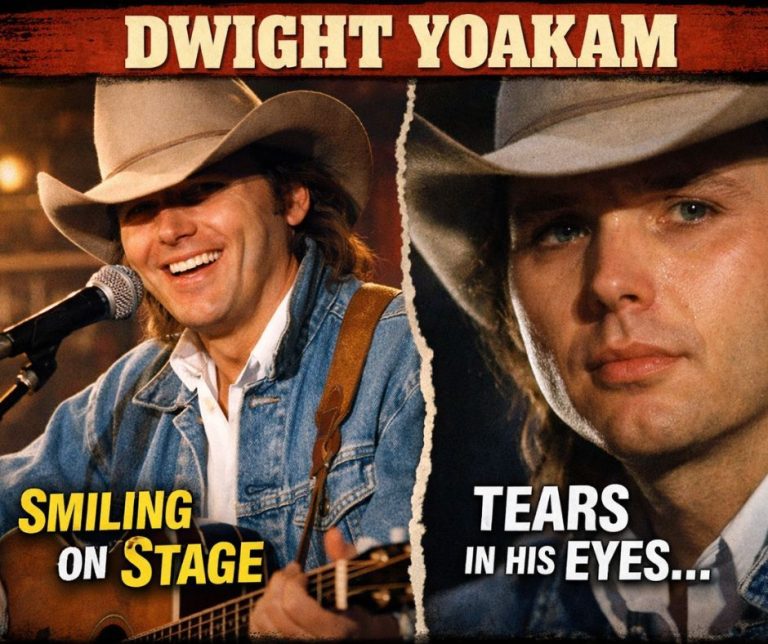
SHOCKING REVISIT: "It Only Hurts When I Cry" — Was Dwight Yoakam Truly Fine, Or Hiding A Heartbreak In Plain Sight?
When discussing country songs that sound upbeat yet quietly carry emotional weight, "It Only Hurts When I Cry" by Dwight Yoakam inevitably enters the conversation.
Released in 1991 as part of the album If There Was a Way, the song became a Top 10 hit on the Billboard Hot Country Songs chart. It strengthened Yoakam's standing as one of the defining country artists of the early 1990s.
But the reason the song still resonates decades later isn't just its honky-tonk rhythm. It's the emotional contradiction at its core.
"It only hurts when I cry." A line that sounds casual. Almost humorous. Yet beneath it lies quiet denial.
The Story Behind the Song
Dwight Yoakam co-wrote the track with Roger Miller. On the surface, the lyrics portray a man insisting he's perfectly fine after heartbreak. He claims he isn't suffering — except, of course, when he breaks down and cries. That ironic twist gives the song its depth. It captures something deeply human: pretending strength while quietly unraveling.
Yoakam has never publicly stated that the song was drawn directly from a personal event. However, during early 1990s performances, many fans noticed a subtle emotional intensity in his delivery — particularly in live renditions. Still, any interpretation remains just that: interpretation.
Musical Contrast
The song reflects Yoakam's Bakersfield sound influence — energetic, crisp, guitar-driven. Musically, it feels lively and bright. Lyrically, it tells a different story. This contrast is part of classic country tradition: masking vulnerability with wit or swagger. "It Only Hurts When I Cry" fits perfectly within that lineage.
The Official Video
The official video keeps things simple. No dramatic storyline. No elaborate symbolism. Just Yoakam and his band performing, with focus on stage presence and facial expression.
That simplicity allows viewers to project their own meaning onto the performance. Some fans, watching years later, have commented that his smile seems layered — confident on the surface, reflective underneath. Again, perception varies.
A Lasting Legacy
More than 30 years later, the song remains a staple in classic country playlists. It represents a defining era of Dwight Yoakam's career — when traditional country met modern production without losing authenticity.
It may not be his most heartbreaking ballad. But it may be one of his most emotionally complex. And perhaps that's why it still lingers. Because sometimes the strongest denial sounds like a catchy chorus.