
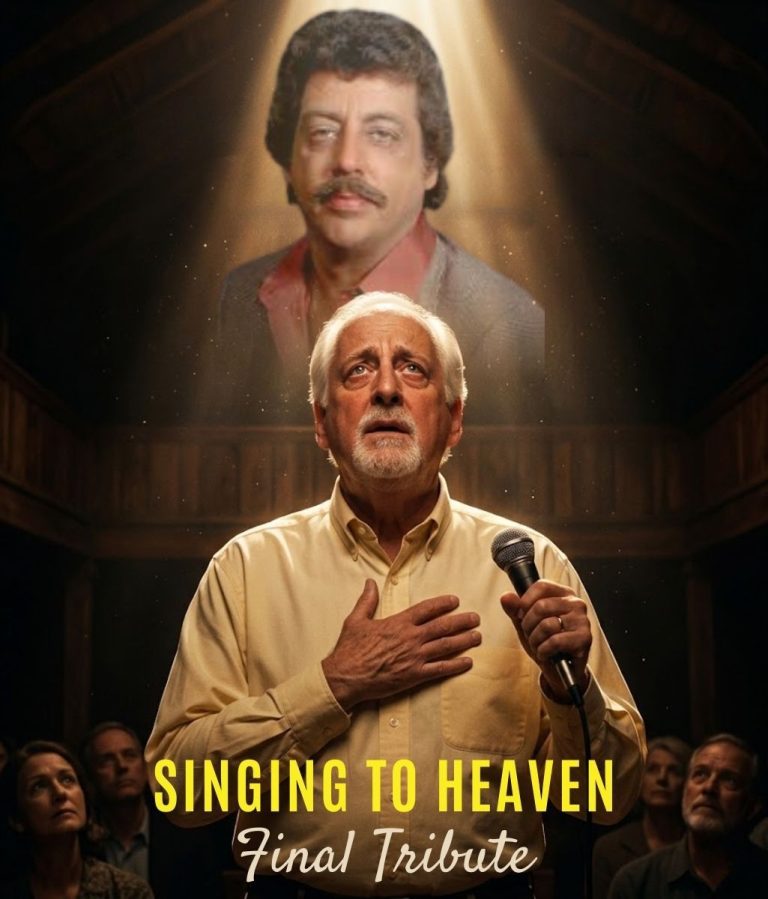
On an evening defined by stillness, Don Reid stepped onto the stage alone. For decades, he had rarely stood without the steady presence of his younger brother, Harold Reid, beside him. Together, as part of The Statler Brothers, they had shaped one of country music's most enduring harmonies. But on this night, one microphone stood unused.
The crowd sensed immediately that this would not be a typical performance. Conversations faded. Programs lowered. A quiet settled over the room—not out of routine courtesy, but out of respect. Don stood still for a moment, gathering himself. Years of experience had prepared him for countless concerts, yet nothing quite prepares a man to sing in honor of a brother who is no longer there to answer with harmony.
When he began, his voice carried the familiar clarity that had defined the Statlers' sound for generations. But there was something deeper beneath it—a tenderness shaped by memory. This was not a performance for acclaim. It was a conversation set to melody.
Harold's bass had once anchored every song they sang together. It had provided depth and character, grounding their quartet in warmth and conviction. Now, in its absence, the space felt almost tangible. Yet rather than diminish the moment, that space gave it meaning. Every lyric Don delivered seemed directed beyond the stage lights, beyond the audience, toward the memory of the brother who had shared his life in music.
He did not overstate his words. He did not dramatize his grief. Instead, he allowed the music to speak. The song unfolded gently, each line carried with care. In certain phrases, his voice wavered—not from uncertainty, but from the sheer weight of remembrance. The audience listened without interruption, many holding back tears of their own.
It was in that hush that the tribute became extraordinary.
For decades, Don and Harold had stood shoulder to shoulder, exchanging glances that communicated timing, humor, and understanding without a single spoken word. Their bond had been forged not only through family ties, but through long tours, shared challenges, and unwavering faith. To witness one brother singing alone was to feel the fullness of what had once been shared.
As the melody reached its final verse, the emotion in the room deepened. There was no elaborate arrangement, no swelling orchestra—just a single voice carrying decades of harmony within it. And when the final note faded, the silence that followed was profound. It was not the silence of emptiness, but of reverence.
Then came the applause—steady, heartfelt, and filled with gratitude. It was appreciation not only for a beautiful performance, but for a lifetime of music that had touched so many.
In that final tribute, Don Reid did more than honor his brother. He reminded everyone present that harmony is never truly lost. It lives on in memory, in recordings, and in the hearts of those who continue to listen. Harold's voice may have fallen silent on stage, but its echo remains inseparable from the songs they created together.
And on that unforgettable night, one brother sang for both.