
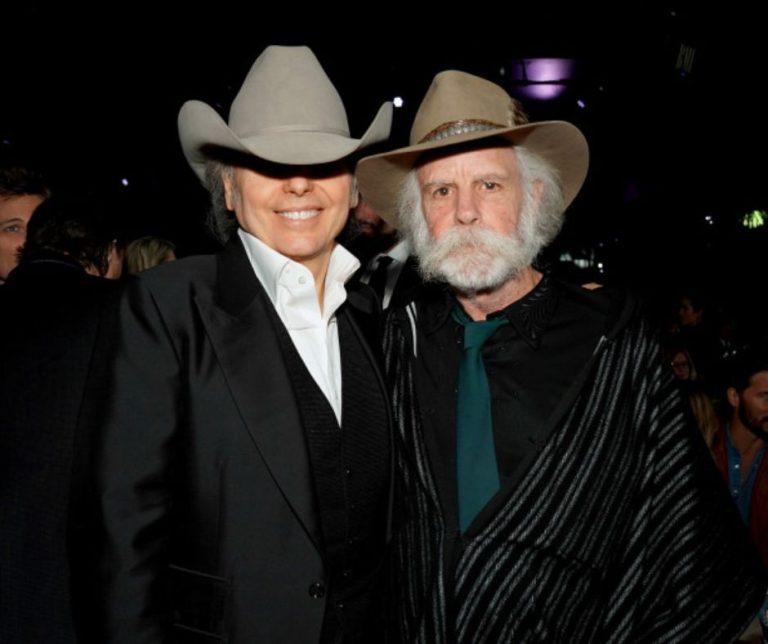
When Two Legends Sang About the Life of a Working Man
In American music history, some songs transcend time.
They are not just melodies people listen to—they are stories about the real lives of millions.
"A Working Man Blues" is one of those songs.
Originally written and recorded by Merle Haggard in 1969, the track quickly became one of the most iconic country songs ever written about America's working class.
But years later, when Dwight Yoakam and Bob Weir performed the song together, many listeners began hearing it in a completely different way.
A Song for People Who Never Stop Working
Merle Haggard wrote "A Working Man Blues" during a period of major social and economic change in the United States during the late 1960s.
The lyrics are simple, but powerful.
They tell the story of a man who works all week long just to support his family. He may not be wealthy or famous, but he takes pride in his work.
One of the song's most famous lines says:
"I'll keep working long as my two hands are fit to use."
That line became a symbol of the hardworking spirit that defined much of America's blue-collar culture.
With its strong rhythm and honky-tonk sound, the song climbed to No. 1 on the Billboard Hot Country Songs chart in 1969.
Dwight Yoakam Revives the Song
More than three decades later, Dwight Yoakam, known for preserving traditional country sounds, began performing the song in his live shows.
Yoakam has always been heavily influenced by Merle Haggard.
For him, performing "A Working Man Blues" was not just a cover—it was a tribute.
But something unexpected happened when Bob Weir, a member of the legendary rock band Grateful Dead, joined him on stage.
The collaboration between a country traditionalist and a psychedelic rock icon created a unique interpretation of the classic song.
When Two Musical Worlds Collide
Bob Weir may not be a country singer in the traditional sense.
However, throughout his career, he has shown a deep respect for American roots music, including folk, country, and Americana.
When Weir and Yoakam performed "A Working Man Blues" together, audiences witnessed something special.
Two artists from very different musical backgrounds united through a song that spoke about perseverance, pride, and everyday life.
The song suddenly felt universal.
It was no longer just about factory workers.
It was about anyone who wakes up every day and keeps working to support the people they love.
Why Some Fans Heard It Like a Confession
Interestingly, when Dwight Yoakam sings the line:
"I drink my beer in a tavern…"
many fans feel like he's telling part of his own story.
After all, the life of a touring musician is not that different from the life of a working man.
Artists travel constantly.
They perform night after night.
They live on the road for months at a time.
In many ways, their lifestyle mirrors the relentless rhythm described in the song.
That's why when Yoakam and Weir perform "A Working Man Blues," the lyrics feel more personal than ever.
It becomes less about a fictional character—and more about the shared experience of hard work.
The Lasting Legacy of the Song
Today, "A Working Man Blues" remains one of the most respected songs in country music history.
It represents the voice of ordinary people who rarely stand in the spotlight but keep the world moving forward.
Later performances—including the collaboration between Dwight Yoakam and Bob Weir—have only strengthened the song's legacy.
And perhaps that is the true power of great music.
A song written more than fifty years ago can still resonate with listeners today as if it were telling their own story.