
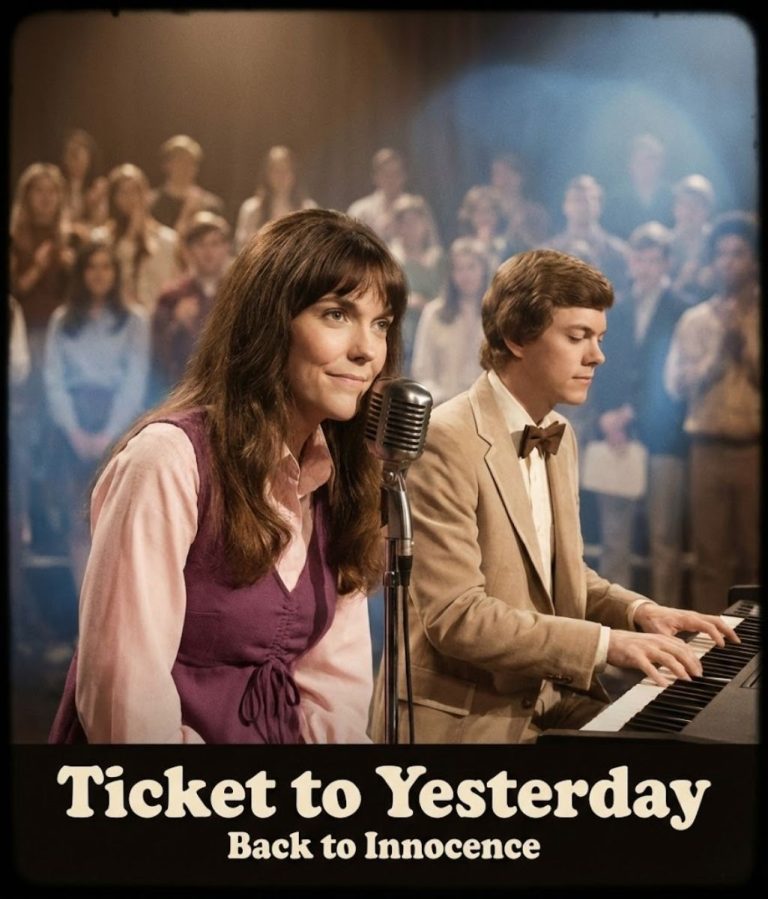
Imagine finding an old ticket stub tucked inside a forgotten book — its edges worn, the ink slightly faded. The date reads 1969. The venue: a modest American college auditorium. The names on the program are not yet legends, just two young musicians with a quiet belief in harmony.
That was the world where The Carpenters first began to shape their sound.
Before international tours and platinum records, there was a teenage Karen Carpenter, seated behind a drum kit or standing at a simple microphone, her voice already unmistakable. Even then, it carried that velvety depth — a contralto tone far beyond her years. It didn't demand attention. It gently claimed it.
Beside her, Richard Carpenter leaned into the piano with focused precision. His arrangements were thoughtful, already revealing the craftsmanship that would later define their chart-topping sound. Together, they were polished yet untouched by the weight of fame.
One particularly treasured early appearance came on Your All-American College Show, a program that captured emerging talent in its most unguarded form. Watching those clips today feels almost surreal. The lighting is soft, the production modest, but the sincerity is undeniable.
Karen's expression holds a mix of concentration and youthful optimism. There is a quiet confidence in the way she phrases each lyric, as though she instinctively understands that simplicity can be powerful. Richard's harmonies blend seamlessly, never overpowering, always supportive — a musical conversation between siblings.
There is something profoundly moving about witnessing artists before the world fully knows them. In those early college performances, you see the beginning of what would become a defining sound of the 1970s. The innocence is not naïveté; it is authenticity. They are not yet icons. They are dreamers — disciplined, hopeful, and completely devoted to melody.
The songs performed during those early days carried a gentle longing. Listening now, it is impossible not to feel a tug of nostalgia — not only for youth, but for a time when music seemed slower, less crowded, more deliberate. Every note feels intentional. Every harmony feels earned.
Perhaps that is why those 1969 glimpses resonate so deeply. They remind us that greatness often begins quietly — in rehearsal rooms, in small auditoriums, in moments when applause is modest but meaningful.
Holding that imaginary ticket stub, you can almost hear the faint echo of a piano chord and the warm rise of Karen's voice. It is the sound of possibility — of two siblings discovering that their shared love of music could travel far beyond those college walls.
You cannot turn back time. But sometimes, through a preserved broadcast or a scratchy recording, you can visit it.
And in those early performances, you hear it clearly: the first whisper of magic that would soon echo around the world.