
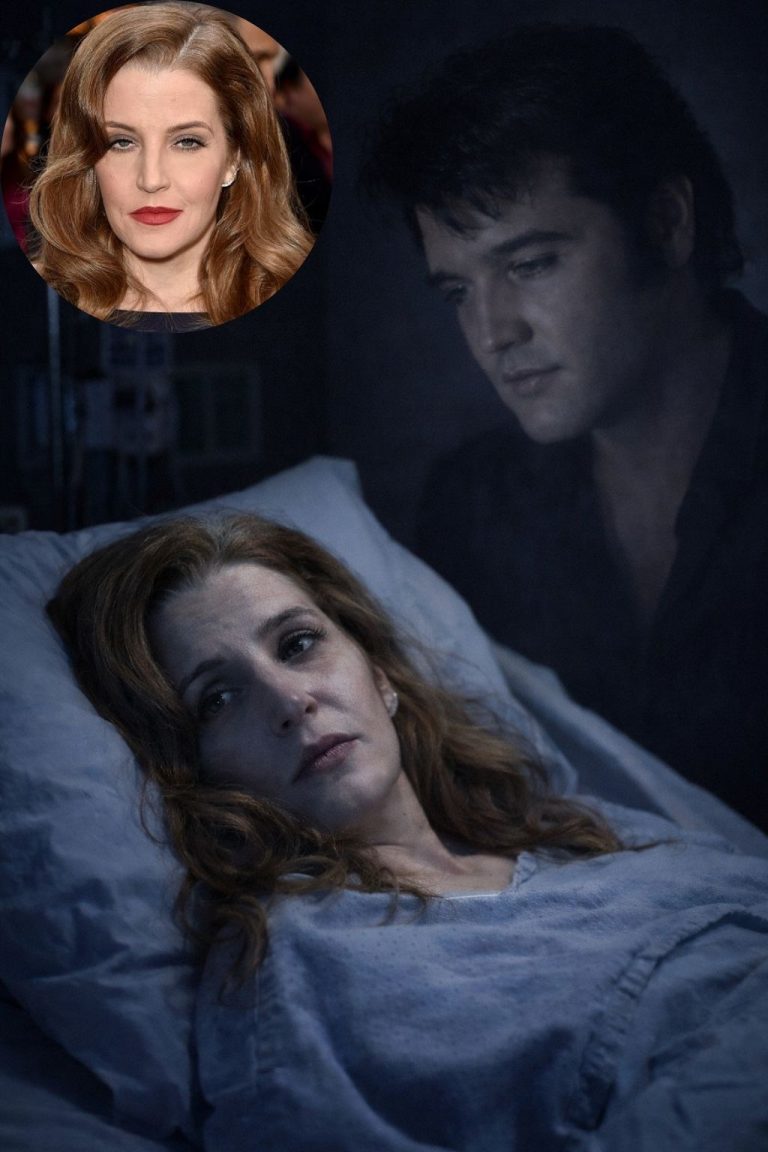
Shortly after 2:17 a.m. in Los Angeles, the atmosphere inside a quiet hospital room grew heavy with the kind of silence that signals history is about to turn a page. Monitors glowed in the dim light, their steady rhythm a fragile reminder of time slipping away. Lisa Marie Presley, the only child of Elvis Presley, lay surrounded by family members who understood that this was not merely a private farewell. It was the closing chapter of a life forever intertwined with one of the most powerful legacies in American music.
Witnesses later described the scene in subdued, reverent tones. The world outside carried on, unaware that within those walls a daughter was confronting memories that had shaped her from childhood. Lisa Marie had long lived beneath the towering presence of her father's legend. Elvis Presley was more than a global icon; he was her protector, her influence, and, in many ways, the defining force of her identity. That connection never loosened its hold, even decades after his passing in 1977.
In the early morning hours, a brief exchange reportedly unfolded that has since stirred deep reflection among admirers. Her voice, though faint, carried an unmistakable urgency. She spoke of her father, not as a distant memory, but as a presence still near. Those nearby were struck by the tone—neither fearful nor confused, but contemplative, as though she were reaching across time itself. One quiet remark suggested that Elvis was "still here," followed by an uneasy pause that left those in the room unsettled. The words were simple. Their meaning was anything but.
Speculation emerged almost immediately. Some believe her statement reflected the powerful bond between parent and child, a connection that outlives physical absence. Others hear something more layered—an echo of unresolved history, perhaps even a private truth never fully expressed. Throughout her life, Lisa Marie navigated admiration, scrutiny, and the relentless expectations that accompany a revered family name. She guarded certain memories closely, choosing carefully what to reveal and what to protect.
Her relationship with her father's legacy was complex. Public appearances often showed grace and composure, yet interviews hinted at the emotional weight she carried. She spoke openly about loss, about the challenge of honoring a legacy while carving out her own path. Music became her voice, though comparisons were inevitable. Grief arrived early in her life, and it never entirely departed. The estate at Graceland stood not only as a monument to Elvis, but as a constant reminder of what had been lost and what could never be reclaimed.
Those final hours now invite reflection on unfinished conversations and silent burdens. Close friends have shared that Lisa Marie often felt a profound responsibility to safeguard her father's image while reconciling the man she knew with the myth the world embraced. That tension may have lingered until the very end. A single sentence, spoken softly in a hospital room, has reopened discussions about what it truly means to inherit greatness—and the solitude that can accompany it.
Public reaction has been swift and emotional. Devoted admirers see the moment as poetic, even spiritual. Skeptics urge caution, warning against reading too much into fragile recollections shared in grief. Yet the enduring fascination speaks to something larger than rumor. It reflects the persistent power of Elvis Presley's memory and the enduring tenderness people feel toward his daughter.
Lisa Marie's life cannot be reduced to her final words. She was a mother, a musician, a guardian of a remarkable heritage. Still, that late-night exchange lingers in the imagination, suggesting that some bonds refuse to fade, no matter how much time has passed. The room may have been quiet, but the questions it left behind continue to echo.
History often closes its chapters without clear answers. In this case, a daughter's whispered reflection has stirred a renewed longing to understand both the legend and the human story behind it. Whether her words were a simple expression of longing or something more profound remains uncertain. What endures is the image of a life shaped by devotion, memory, and an inheritance both magnificent and heavy.
The monitors eventually fell silent, yet the conversation has not. Somewhere between myth and memory lies a truth still waiting to be fully understood, and perhaps that mystery is part of the legacy itself.